
Friday, April 10th Legislative & Public Health Updates
- 2 days ago
- 18 min read
Dear friends,
I am writing to you today with legislative, public health, and Cambridge updates. If you want even more updates, please follow me on Instagram @repdecker.

The Boston Area Rape Crisis Center (BARCC) offers free, confidential services to empower and heal all survivors of sexual violence ages 12 and older, and their loved ones, regardless of when the violence occurred. Every year, the BARCC Walk for Change raises vital funds to support the free services BARCC continues to provide for thousands of survivors, their families, loved ones, and community members. I will be walking with the BARCCC team for this year’s Walk for Change on Sunday, April 26, and hope that you will join us.
Table of Contents
Legislative Updates
A Glimpse at the Past Week
Public Health Updates
Cambridge Updates
Services and Resources
Legislative Updates
House Passes Children’s Social Media and Phones in Schools Ban
This week, the House passed legislation to better protect young people online and in our schools. The bill requires social media companies to implement age verification systems that prohibit users under 14 and require parental consent for users ages 14 to 15. It also limits cell phone use during the school day and ensures schools provide age-appropriate education on responsible social media use, including the impacts on mental health, bullying, and overall well-being.
Importantly, the legislation includes strong protections for student privacy. It explicitly prohibits social media platforms from sharing information — including with parents — about a minor’s LGBTQ+ status or other characteristics protected under state law.
Many of you reached out with concerns about how this bill could impact LGBTQ+ youth. I shared those concerns from the start and worked closely with the LGBTQ+ Caucus, who met in my office several times to help shape the strongest possible language, as well as with House leadership to ensure the final bill included these critical protections. I’m grateful for their leadership and for a process that took these concerns seriously and addressed them in the redraft that was ultimately passed. Thank you for raising your voices. Your advocacy matters, and it helped strengthen this bill.
I also want to acknowledge concerns about privacy and data security. The bill does not mandate any single method of age verification, such as biometric data collection, or eliminate online anonymity. However, it does require that any data collected for age assurance be kept confidential, segregated, and used solely for that purpose.
This legislation is grounded in a growing body of research about how social media and constant phone use are affecting young people. According to the Pew Research Center, about 95% of U.S. teens use social media, and nearly half say they are online almost constantly. In 2023, the Office of the U.S. Surgeon General issued a national advisory warning that social media can pose significant risks to youth mental health, including links to anxiety, depression, sleep disruption, and cyberbullying.
Experts have also pointed to the role of platform design. Features such as infinite scroll, autoplay video, and algorithmically driven feeds are intentionally designed to keep users engaged for as long as possible, and research shows these tools can encourage excessive use — especially among adolescents whose brains are still developing. Educators and school mental health professionals across Massachusetts have been raising these concerns for years, which is why this legislation also includes limits on cell phone use during the school day and requires schools to provide age-appropriate education about responsible social media use and its impact on well-being.
Other democratic countries have already begun establishing stronger guardrails for children online. This legislation reflects input from educators, parents, pediatricians, and mental health advocates and represents an important step toward ensuring social media companies design their platforms with young people’s safety in mind.
This is an important step forward in protecting young people while respecting privacy and civil rights. I will continue working to ensure these protections are robust, enforceable, and centered on the well-being of our communities. While it would have been my strong preference to pass data privacy protections at the same time or beforehand, the House will take up a comprehensive data privacy bill in a few weeks.
I will be sending a separate email soon with more details about this bill, so please keep an eye on your inbox.


On Thursday, I hosted a briefing in the State House with the Massachusetts Office for Victim Assistance (MOVA) to discuss their FY27 budget priorities. The briefing featured a panel of organizations that shared how essential MOVA funding is in ensuring they provide services to survivors and victims throughout Massachusetts.
As you may know, I have been a longtime champion of MOVA. In 2021, Congress failed to appropriate $60 million to restore funds necessary for Victims of Crime Act (VOCA) programming in Massachusetts that had been depleted over time. I led the House’s effort in ensuring the VOCA Bridge was fully met, as the Legislature stepped up three times to provide $20 million installments. If the VOCA Bridge were not fulfilled, over 100 direct service programs funded by MOVA would see cuts in programming, including those who participated in the panel.
This session, I filed An Act to promote victim service funding in partnership with MOVA. This bill ensures that gifts, grants, and donations—not just court fines and fees—can be directed into key victim compensation and assistance funds. I also filed the language of this bill as an amendment to the FY26 budget last year and am advocating for dedicated MOVA funding in the upcoming FY27 budget.
Thank you to The Network/La Red, Asian Task Force Against Domestic Violence, the Berkshire Resources for Integration of Diverse Groups and Education, and Louis D. Brown Peace Institute for being a part of the panel and for the work you do to support the diverse and unique needs of each survivor.
A Glimpse at the Past Week

Thank you to primary care physicians from Mass General Brigham for taking the time to sit down with me and share updates and insights on their unionization efforts. The right to collectively bargain is a cornerstone of a fair workplace. When physicians have a seat at the table, they can advocate not only for fair working conditions but also for the resources and support needed to provide the best possible care to their patients. Strengthening the voices of frontline healthcare workers ultimately leads to stronger healthcare systems and healthier communities.
I appreciate the opportunity to hear directly from these physicians about their work and their vision for a more sustainable and equitable healthcare system. This week, I signed onto a letter with several of my House colleagues in support of their union, and I look forward to continuing to uplift their efforts.


I was thrilled to speak at Professor Jamie Klufts’ Public Health Policy & Advocacy Course at Boston University on Tuesday during National Public Health Week. It’s always an honor to speak with students and share insights about my career journey and path to the State House. We had a great discussion on my legislative priorities, the critical work of the Public Health Committee, and the importance of advocacy in responding to federal challenges to public health. These public health students are the future, and I can't wait to see the impact they will make.

This Tuesday, I also hosted a virtual town hall focused on the current state of reproductive, maternal, and gender-affirming health care, and on the steps Massachusetts has taken to protect access to these essential forms of care. I’m so grateful to have been joined by an incredible group of leaders who are making a difference both locally and nationally: Dr. Ndidiamaka Amutah-Onukagha from the Tufts Center for Black Maternal Health and Reproductive Justice, Dallas Ducar from Fenway Health, and Claire Teylouni from Reproductive Equity Now.
They each brought a wealth of expertise to the conversation, sharing more about the important work their organizations do every day to collaborate with legislators and other stakeholders to address the onslaught of federal attacks on reproductive justice, maternal health, and gender-affirming care. As the federal government seeks to undermine the rights and access to care for women, birthing individuals, and LGBTQ+ communities, we must remain informed and organized.
I look forward to hosting similar events in the future—my goal is to share accurate insights into the current policy landscape and highlight the proactive steps the Massachusetts Legislature is taking to protect public health. I hope to see you all at my next virtual town hall. Watch out for updates on my social media and in this newsletter in the coming weeks.


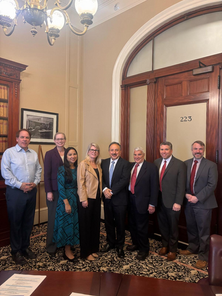


I was happy to attend Cambridge Health Alliance (CHA)’s meeting in the State House with my colleagues in the Cambridge legislative delegation to hear updates on the system’s strategic initiatives, community health partnerships, and budget priorities for the coming year. Cambridge Health Alliance plays a critical role as a safety-net health system, providing high-quality care to many low-income and high-needs patients across our region, including residents of several gateway communities. These conversations are an important opportunity for legislators to better understand the challenges safety-net providers face and the ways the Commonwealth can partner with them to strengthen access to care.
I have worked closely with leaders and staff at CHA for many years to help ensure they have the resources and support they need from the state to continue delivering outstanding care to all patients, regardless of their ability to pay. Their work goes far beyond clinical care—supporting behavioral health services, preventive care, and community-based programs that help improve health outcomes across the region.
I was proud to have filed an amendment in the FY25 budget to ensure Cambridge Health Alliance’s eligibility for increased safety net funding. This amendment secured language that would make CHA eligible to receive $66 million in federal funding through Medicaid managed care approval, and an additional $43 million a year for the next three years.
I also filed an amendment to the FY24 budget to secure $1 million to renovate the CHA Birth Center, which will reopen this summer for the first time since 2021. The CHA Birth Center was the only freestanding birth center in Massachusetts that served a high-needs, low-income population.
Thank you to Dr. Assaad Sayah, Donna Fox, and the entire CHA team for their dedication to serving Cambridge every day and for their ongoing efforts to improve the health and wellbeing of our communities so that everyone has the opportunity to thrive.


I was pleased to host Merri Ansara of Massachusetts Peace Action for a conversation with several of my colleagues from the legislative delegation I led to Cuba in the fall of 2024. During that visit, we met with public officials, hospital staff, nonprofit leaders, and representatives from academic and research institutes to better understand Cuba’s healthcare system and the challenges communities face under ongoing resource constraints.
Our discussion this week offered a valuable opportunity to reflect on what we learned from those conversations, explore opportunities for continued dialogue and collaboration, and consider how international exchange can deepen our understanding of public health, medical training, and community-based care. We also heard about Merri's recent travels and how difficult life on the ground in Cuba is, even compared to our trip a year ago. I’m grateful to Merri for sharing her insights and helping continue this important conversation.





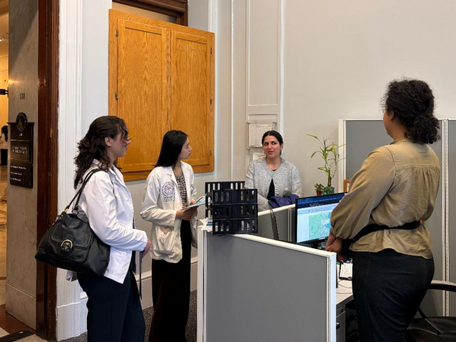

This was another busy week in the State House, with advocates visiting from the Massachusetts Association of Physician Assistants, the Massachusetts College of Pharmacy and Health Sciences, Mothers Out Front, and Harvard Law students advocating on behalf of Clean Slate Massachusetts. I always appreciate the opportunity to meet directly with the people and organizations working every day to strengthen our communities. Our conversations ranged from expanding access to health care and supporting the next generation of health professionals, to advancing climate action and creating fairer pathways for people seeking a second chance after involvement with the justice system. Thank you to everyone who took time out of their day to speak with my staff and me—your perspectives, expertise, and lived experiences help inform my work and ensure that the policies we advance at the State House reflect the real needs and priorities of people across our district and the Commonwealth.


In a vibrant celebration of Black Maternal Health Week 2026, my staff had the opportunity to attend the Tufts Center for Black Maternal Health and Reproductive Justice's 9th Annual Black Maternal Health Conference, the nation’s largest convening focused on global Black maternal health outcomes. This year's theme, "Women's Health Now: Innovations, Equity, and Whole-Person Care," highlights the urgent call to revolutionize women's health across the entire maternal journey—from fertility and pregnancy to postpartum and midlife. It emphasizes the necessity of equity-driven, interdisciplinary, and community-informed approaches that address the full spectrum of women's health needs. The conference explores how leadership, research, clinical practice, policy, and lived experience intersect to drive meaningful systems change, while elevating solutions that move equity from concept to action, hearing from a powerhouse of speakers committed to improving Black maternal and women’s health outcomes.
Public Health Updates
HHS Updates Vaccine Panel Requirements, Expanding RFK’s Scope in Vaccine Decisions
A new charter published by the Centers for Disease Control and Prevention (CDC) in the Federal Register attempts to expand Health and Human Services (HHS) Secretary Robert F. Kennedy’s scope regarding vaccine decisions. Last month, a federal judge blocked the Trump administration from implementing a number of vaccine decisions made over the last year by Health and Human Services (HHS) Secretary Robert F. Kennedy Jr. This ruling reversed all decisions made by the members of the Advisory Committee on Immunization Practices (ACIP) appointed by Secretary Kennedy. ACIP is a Centers for Disease Control and Prevention (CDC) panel typically composed of public health experts who make recommendations on vaccine use and vaccine-preventable diseases nationwide. Last year, Secretary Kennedy fired all 17 members of the committee and appointed his own appointees, many of whom have expressed vaccine-sceptic views. The Boston-based federal judge blocked Kennedy’s action to replace the panel with known vaccine skeptics because the appointees were “distinctly unqualified" and the charter membership rules were unlawfully violated. The new charter also gives ACIP responsibility for reviewing global initiatives and reviewing vaccination schedules by other countries and international organizations, as well as increasing its focus on potential harms of vaccines.
Acting CDC Director Delays Publication of Report Showing Benefits of COVID-19 Vaccines
The acting director of the Centers for Disease Control and Prevention (CDC), Dr. Jay Bhattacharya, has delayed the publication of a report showing that the COVID-19 vaccine distributed last winter was associated with a 50% decrease in emergency department visits and hospitalizations among healthy adults who received it. According to two CDC scientists, the report was set to be published in a March edition of the Morbidity and Mortality Weekly Report (MMWR), the CDC's flagship scientific journal. Although this report has already passed the CDC's scientific review process, Dr. Bhattacharya expressed concerns about the scientific methodology used, known as the test-negative design, which delayed the report's release. According to the former leader of the CDC's influenza division, the test-negative design has been used for two decades to measure the efficacy of flu vaccines. While it is not a perfect method, it is well-suited to evaluating real-world effectiveness, where confounding variables cannot be completely controlled and accounted for. Notably, the same methodology has been used to evaluate vaccine effectiveness in reports previously published in the MMWR and other respected peer-reviewed journals, like The Lancet and the New England Journal of Medicine.
CDC Pauses Testing for Certain Infectious Diseases, Including Rabies and Mpox
The Centers for Disease Control and Prevention’s (CDC) Infectious Disease Laboratories, which are responsible for testing and analyzing specimens from state and local health departments, have temporarily paused diagnostic testing for several contagions, including poxvirus, parasitic infections, and toxins. The CDC offers testing for dozens of pathogens to assist state and local public health laboratories that are not equipped to conduct them. Although the CDC has paused some of its lab testing in the past, this is the most extensive pause to date, affecting over two dozen types of testing. It is unclear when testing might be restored or why they were halted in the first place. While a spokesperson claims that testing will resume and describes the pauses as part of a "routine review" to ensure high-quality diagnostics, questions linger regarding whether federal fluctuations and workforce issues may have contributed to this testing standstill. Lab officials warn that this pause could delay early detection of infectious diseases, compromising the effectiveness of national disease surveillance.
Surge in Estrogen Patch Prescriptions to Treat Menopause Symptoms Drives Shortage
Over the past two years, there has been a significant increase in the number of women seeking out estrogen-based hormone replacement therapy (HRT) to treat symptoms of menopause and perimenopause. Menopause is defined as twelve consecutive months without a menstrual period and often occurs around the age of 52. The transition period, known as perimenopause, often brings hormonal fluctuations that lead to hot flashes, sleep disturbances, mood changes, and vaginal or urinary issues that impact quality of life. Between 1999 and 2020, the estimated prevalence of HRT to treat menopause fell from nearly 30% to less than 5%, after a 2002 study from the Women's Health Initiative (WHI) showed that the potential health risks associated with the HRT commonly prescribed at the time outweighed the benefits. As a result of this surge in demand, manufacturers have been struggling to keep up with the need for estrogen patches used to treat menopausal symptoms. Industry sources indicate that these shortages could last for up to three years. Notably, the FDA has tools to mitigate these shortages, such as requiring estrogen patch manufacturers to diversify and back up their supply chains and to engage in proactive inventory monitoring.
FDA Approves Eli Lilly’s New GLP-1 Pill, Foundayo
Last week, the Food and Drug Administration (FDA) approved its second GLP-1 pill for weight loss, called Foundayo, providing a new option for those seeking GLP-1 medicines without injections. This pill follows Novo Nordisk’s Wegovy pill and adds to the growing list of GLP-1 medications available on the market, including Zepbound and Ozempic. In addition to weight loss, Foundayo is also approved to help reduce the risk of serious cardiovascular events, such as nonfatal heart attacks and strokes. Unlike the Wegovy pill, which must be taken on an empty stomach first thing in the morning, Foundayo can be taken at any time of day and does not have restrictions around food or water consumption. This can simplify the daily medication regimen for people prescribed medications that must be taken with food and water in addition to a GLP-1. The review of Foundayo was completed in just 50 days, making it the fastest approval of a new molecular entity since 2002, as most new drug approvals typically take six to ten months. Foundayo's approval was supported by two clinical trials, during which participants on the highest dose decreased their body weight by 12% over 72 weeks, compared with 0.9% for people taking a placebo. As of April 6, the drug is available for free home shipping through the LillyDirect platform, and it is expected to be accessible through pharmacies and telehealth providers in the coming months.
New Study Links Plastic Additives to Millions of Preterm Births Worldwide
A new study from NYU Langone Health builds on previous research to investigate a link between plastic exposure and preterm births. Researchers examined two chemicals, Di-2-ethylhexylphthalate (DEHP) and its common replacement, diisononyl phthalate (DiNP). Both of these chemicals are phthalates—a class of substances known to be endocrine disruptors, which can harm human health. They are found in many household items, including toys, shower curtains, and plastic food storage containers. Researchers aimed to understand the health impacts of these compounds and estimated that in 2018 alone, exposure to DEHP may have contributed to nearly 2 million preterm births. Researchers also found that 74,000 neonatal deaths are likely associated with DEHP exposure. Analyzing data on DEHP and DiNP exposure from over 200 countries, the researchers identified significant disparities in disease burden across different regions. For instance, the Middle East, South Asia, and Africa reported higher rates of morbidity and mortality that were attributed to DEHP or DiNP exposure. While the findings establish a link between phthalates and preterm births, other social determinants of health could contribute to increased rates of preterm birth, like access to prenatal care.
Cambridge Updates
Bridge to College Program Information Sessions
The Community Learning Center’s Bridge to College Program prepares adult learners to succeed in college-level courses. Information sessions will be held throughout the spring, where you can learn more about the program and whether it can support your education goals. You can sign up for an information session here. The 2026-2027 Bridge to College program will begin in September and the deadline to apply for the program is August 3, 2026. Classes meet weekly on Mondays and Wednesdays from 6:15 – 9:15 p.m. at the Community Learning Center in Central Square. There are also group advising sessions once a month on Thursdays. Contact Ava Kiem at akiem@cambridgema.gov or call 617-545-3860 with any questions.

Overnight Storrow Drive & Soldiers Field Rd Closures — Memorial Drive Detour
Storrow Drive eastbound and Soldiers Field Road eastbound from North Harvard Street to Mugar Way in Boston will be closed weekly through August on Sunday nights, through Thursday nights, from 8:00 p.m. to 5:00 a.m. the following morning. These closures are required to accommodate interim concrete ceiling repairs for the Storrow Drive tunnel maintenance project. A detour will be in place from North Harvard Street over the Anderson Bridge to Memorial Drive in Cambridge, and into Boston using the Longfellow Bridge.
Medication Takeback Day
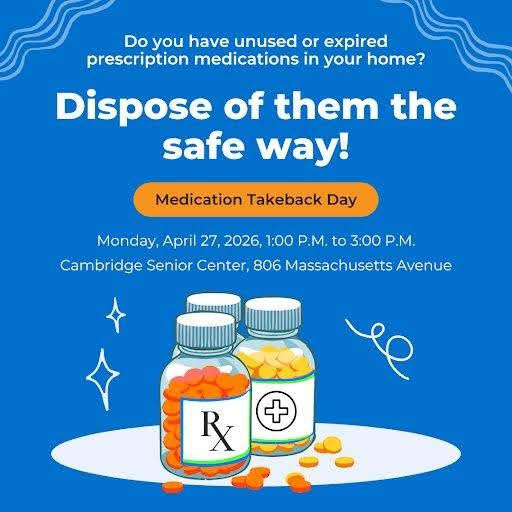
The Cambridge Public Health Department, Cambridge Police Department, and Cambridge Council on Aging are hosting a Medication Takeback Event on Monday, April 27 from 1:00 p.m. to 3:00 p.m. at the Cambridge Senior Center (806 Mass Ave). Personnel will be available on-site in the lobby to accept unwanted or unused prescriptions, over-the-counter meds, and vitamins. Sharps, liquids, and creams/ointments will NOT be accepted. For any questions about the event or safe medication disposal year-round, please contact Danielle McPeak, the CPHD Prevention and Recovery Specialist, at dmcpeak@cambridgepublichealth.org.
Services and Resources
Immigration Resources
MIRA Immigration Helpline: Through this helpline, MIRA provides individuals and community-based organizations with answers to the most commonly asked immigration questions. You can contact the helpline by scheduling a call online or leaving a voicemail at 508-293-1871.
Guidance for Immigrants and their Employers: MLRI and MIRA have created guidance to prepare immigrants and their employers for ICE interactions. Here is the guidance; please share it widely with your networks.
LUCE Defense Hotline: If you see or suspect ICE or federal agents are in your neighborhood, contact the LUCE Immigrant Defense Network’s Hotline, which operates in several languages, at 617-370-5023 from 9am-5pm. A trained operator will ask for details, then dispatch a volunteer to the site, who will attempt to verify the situation and the presence of ICE. You can learn more about LUCE and their upcoming volunteer trainings at lucemass.org.
De Novo Center for Justice and Healing: De Novo is a Cambridge-based nonprofit that provides free civil legal assistance and affordable psychological counseling to people with low incomes. Importantly, De Novo also offers high-quality, free legal assistance to low-income immigrants and asylum seekers who are living in Massachusetts. You can learn more about their immigration related services here, and their general mission and work at denovo.org.
Reliable sources of information on policy changes:
Food Assistance Resources
If you need help meeting your or your family’s nutritional needs, you are not alone. You can find information on Cambridge food pantries, free community meals, and other local food resources here.
Mass.gov/SNAPFreeze provides resources for people in need of food assistance and ways for residents and businesses to donate or volunteer.
Project Bread’s FoodSource Hotline is free, confidential, and has counselors available in 180 languages. You can call or text 1.800.645.8333 to access the hotline, or chat with a counselor online using the “Live Chat” feature at the bottom of the website.
Greater Boston Food Bank has information on food assistance as well as opportunities to donate and to volunteer.
Cambridge Food Resource Guide has information about food pantries, free community meals, food resources for older adults, and more, and is available in 8 languages.
Reproductive Care, Gender-Affirming Care, and Crisis Resources
These are a few of the resources and help lines available for people seeking reproductive or gender-affirming health care or experiencing a crisis. Help is available, and you are not alone.
MBTA Income-Eligible Reduced Fare Program
The MBTA’s income-eligible reduced fare program offers reduced fares to riders between the ages of 18 and 64 enrolled in an approved state assistance program, including:
Emergency Aid to the Elderly, Disabled & Children (EAEDC)
Transitional Aid to Families with Dependent Children (TAFDC)
MASSGrant
MassHealth
Supplemental Nutrition Assistance Program (SNAP)
You can learn more about the program and how to apply at mbta.com/fares/reduced/income-eligible.
Intimate Partner Abuse Prevention Helpline
This initiative is designed to prevent intimate partner violence by fostering accountability and change in people who harm or may harm their partner. You can find more information at 10to10helpline.org or by calling 877-898-3411.
SafeSpot Overdose Prevention Helpline
SafeSpot is a virtual spotting/overdose detection service for people who use drugs. Learn more at safe-spot.me or access it by calling 800-972-0590.
Alzheimer's Association Helpline
The Alzheimer’s Association is a nonprofit that provides support, research, and care for Alzheimer’s and dementia. It is available 24/7 for caregivers and patients. More information is available at alz.org, or by calling 800-272-3900.
MassLegalHelp.org is a resource to help Massachusetts residents learn about their legal rights. The website does not offer legal advice or answer individual questions, but has a page about options for finding a lawyer. It does provide resources for those facing legal issues, such as a landlord refusing to make repairs, appealing the denial of SNAP benefits, and questions about getting a CORI sealed.
Free Shuttle Bus Transportation Available to Older Adults in Cambridge
Council on Aging (COA) Bus Service
On Mondays and Wednesdays, the shuttle bus is available to residents who live in Central Square (02139) and East Cambridge (02141)
On Tuesdays and Thursdays, the shuttle bus is available to residents who live in North Cambridge (02140) and West Cambridge (02138)
To reserve a seat on the shuttle bus, call the Council on Aging’s Transportation Office at 617-349-7254. Please make reservations at least 2 business days in advance. COA staff will share a morning pickup time with residents once reservations are complete.
Council on Aging (COA) Mall Shopping Group Transportation
The Mall Shopping Group shuttle bus provides free transportation to Arsenal Yards in Watertown, which has a variety of retail shops, grocery stores, and restaurants to explore. The shuttle can also bring residents to the Watertown Mall Plaza, which includes a Target and Registry of Motor Vehicles.
This trip alternates between Tuesdays and Wednesdays each week. The shuttle leaves the Cambridge Senior Center at 10:30 a.m. and returns to the Senior Center at 1 p.m. Home pickup is available upon request.
To reserve a seat on the shuttle bus for the Mall Shopping Group, call the Council on Aging’s Transportation Office at 617-349-7254. Please make reservations at least 2 business days in advance.
Door2Door by SCM Transportation
Door2Door Transportation by SCM is available to Cambridge residents who are 60 years or older or residents who have a mobility impairment. The transportation service provides rides to medical appointments and grocery stores. Door2Door is also piloting a weekly shuttle service to the Target on Somerville Ave. in Somerville.
For reservations, call 617-625-1191 between 9 am and 1:30 pm on weekdays, excluding holidays. When you hear the greeting, press “0” to speak to reservations.
Welcome Baby Boxes for Cambridge Parents
The Center for Families provides Baby Boxes to eligible Cambridge parents who have a child under one year old.
The Baby Boxes include diapers, wipes, children's books, and community resources for families.
Parents can customize their Baby Box by choosing items sized for a 0–6-month-old or 6–12-month-old. They can also select a baby carrier, diaper backpack, and breastfeeding supplies for their Baby Box.
If you’re interested in signing up for a Welcome Baby Box, please fill out this form or contact welcomebabyboxes@cambridgema.gov.
As always, please contact me with questions or concerns at Marjorie.Decker@mahouse.gov.
Sincerely,
Marjorie

