
Friday, February 27th Legislative & Public Health Updates
- Feb 27
- 18 min read
Dear friends,
I am writing to you today with legislative, public health, and Cambridge updates. If you want even more updates, please follow me on Instagram @repdecker.
As the Massachusetts Legislature enters the second year of our two-year session, we’re moving into the most action-packed phase — when bills advance to the House floor, and key votes take place.
Your voice is essential to shaping this work. I deeply value hearing directly from constituents and regularly co-sponsor and file legislation based on the priorities you share with me. As we head into this busy stretch, I invite you to take a few minutes to complete our community survey and let me know what issues matter most to you and what you hope the Legislature will address in the months ahead. Your input directly informs and guides my work on your behalf. You can participate by scanning the QR Code below or by clicking here.
Table of Contents
Legislative Updates
A Glimpse at the Past Week
Public Health Updates
Cambridge Updates
Recent Press
Services and Resources

Legislative Updates

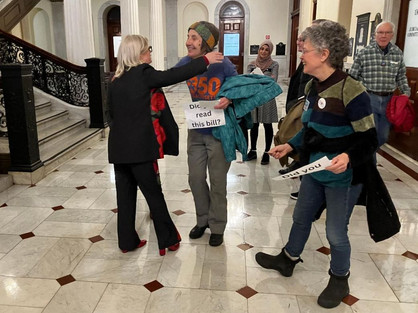

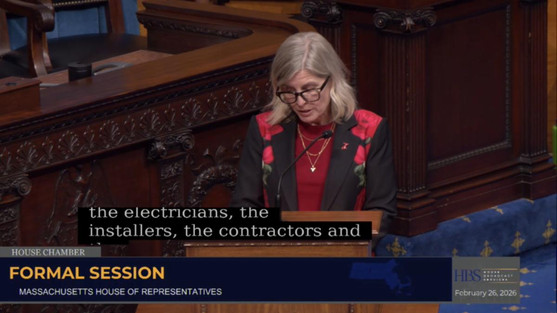
As you may have seen in my email last night, the House voted yesterday to pass An Act relative to energy affordability, clean power, and economic competitiveness (H.5151), legislation focused on lowering emissions, accelerating the clean energy transition, and addressing the very real cost burdens many families are facing every month.
Because so many of you spoke up when the original bill came out of committee in November, we paused the vote and pressed for substantial revisions. I worked closely with House leadership, met with stakeholders, and submitted detailed feedback to ensure the final version reflected our district’s values, including reaffirming our commitment to our 2030 climate goals, maintaining the moderate-income discount rate, and prohibiting deceptive practices by predatory third-party competitive retail suppliers.
I also filed three amendments to strengthen the bill, two of which were adopted. My third amendment, which addressed Mass Save surcharge relief, did not pass. I know that some of you share in my disappointment that this did not get adopted — but I am not deterred. I am confident the Senate will take up the work on Mass Save and further examine ratepayer relief and accountability. I fully expect that these issues will continue to be negotiated and that we will see additional improvements incorporated into the final bill before it returns to the House for a final vote. I remain committed to pushing for those reforms in conference.





A historic blizzard didn’t stop my staff and me from meeting with advocates about the state’s fiscal year 2027 (FY27) budget. I’m grateful to all the organizations, nonprofits, and community partners who spoke with us about how the Legislature can respond to the needs of those they serve, especially in the face of federal cuts to many of the services they provide.

I convened the Mayor, City Manager, and staff of the Trial Court for a meeting about the Cambridge District Court, which has been illegally located outside of Cambridge in Medford for 16 years and is inaccessible by public transportation — requiring onerous transfers between buses and trains. I have filed An Act requiring the relocation of the Cambridge district court for the past four legislative sessions and was pleased to see it reported favorably by the Joint Committee on the Judiciary this month. Our conversation centered on constructive and creative ways to get the District Court back in Cambridge. I was heartened to know that there seems to be traction on this moving forward, and I look forward to working with stakeholders to get the District Court back to Cambridge, where it belongs.
A Glimpse at the Past Week

I was excited to speak at Mass NOW’s briefing on menstrual equity this past Tuesday. Period poverty – or limited access to safe and clean menstrual products, sanitation facilities, and menstrual hygiene education – impacts 1 in 4 women in Massachusetts and can lead to health complications and mental distress. Rising prices for sanitary pads and tampons force menstruating individuals in the Commonwealth to make difficult choices, often choosing between essential hygiene products and other necessities.
I co-filed An Act concerning disposable menstrual products in schools (H.684) with Representative Jeff Roy this session. This bill would require menstrual products to be provided in public schools. This bill would require menstrual products to be provided in public schools. As House Chair of the Joint Committee on Public Health, I reported out a comprehensive bill, An Act to increase access to disposable menstrual products, that threads together the different menstrual equity bills this session, to ensure menstrual products are provided in K-12 public schools, public universities, shelters, correctional facilities, and state buildings.
Thank you to Mass NOW for inviting me to speak and for your tireless advocacy on this important issue, and to my colleagues – Leader Roy, Chair Domb, Chair Livingstone, and Chair Barber – for their leadership on increasing access to menstrual products. I look forward to continuing to promote autonomy and dignity, fostering period equity, and ensuring menstrual equity is a reality in Massachusetts.


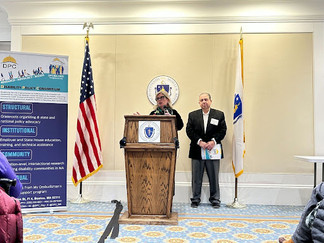


I was honored to speak at the annual Disability Policy Consortium Legislative Briefing, which highlighted the lived experiences of our community members. I am proud to co-file An Act to create affordable homes for persons with disabilities (H.1481) with Representative Consalvo. The Alternative Housing Voucher Program was established in 1995 to provide housing vouchers for rental assistance to non-elderly persons with disabilities and low incomes. H.1481 improves the program by updating the definition of disability, increasing age eligibility from 60 to 62, and allowing any unspent funds to be carried into the next fiscal year for program stability. As someone who grew up in public housing, I am deeply aware of how important it is to ensure access to safe, stable, affordable housing. I want to thank the Disability Policy Consortium for their advocacy and dedication to these issues.

On Wednesday, I had the opportunity to meet with the Founder and Director, as well as the Assistant Director, of The Space Consortium. What began eight years ago as an initiative launched by Harvard and MIT faculty to expand access to space education has grown into a statewide effort now serving more than 30,000 participants each year.
Through programs like Space Week each spring, STEM Week each fall, and ongoing partnerships with schools, museums, and libraries, The Space Consortium is making hands-on science and space exploration accessible to students and families across the Commonwealth—including roughly 5,000 participants annually in Cambridge.
Thank you to The Space Consortium team for your commitment to expanding opportunity and inspiring the next generation of scientists, engineers, explorers, and space enthusiasts.

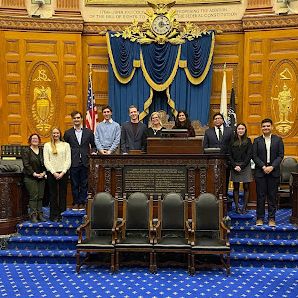


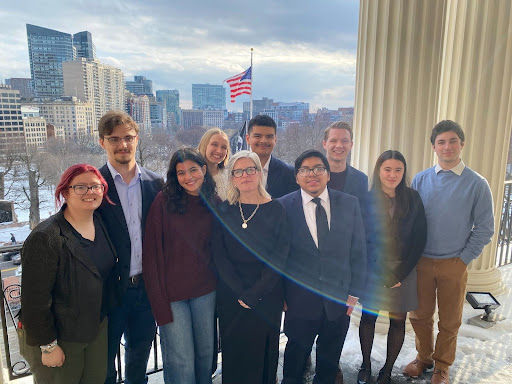
I was thrilled to host members of the Tufts Democrats — including a former intern of mine — on Wednesday for a visit and tour of the State House. It’s always heartening to see young people engaging in the legislative process, and I was so impressed by their questions and observations. Please reach out if you would like to arrange a visit by calling 617-722-2130 or emailing Marjorie.Decker@MAHouse.gov.

On Wednesday, students from the MIT Graduate Student Council stopped by my office during their advocacy day. We discussed the importance of funding science and research amid federal cuts and how Massachusetts can help fill these gaps and ensure this crucial work continues.

I wore red along with my colleagues in the Women’s Legislative Caucus on Thursday to raise awareness for heart disease, which disproportionately affects the health of women in Massachusetts and beyond. The American Heart Association’s Go Red for Women initiative continues to champion closing the gender gap in heart health and ensuring everyone has the knowledge and resources to protect their well-being.

This morning, I met with constituents to discuss the expansive immigration policy introduced by the Massachusetts Black and Latino Legislative Caucus at the beginning of the month. The PROTECT Act (An Act promoting rule of law, oversight, trust, and equal constitutional treatment) includes protections for immigrant communities, safeguards our courts, and ensures consistent due process and equal protection under the law. As I wrote in an earlier email, legislation I filed alongside my colleague, Representative Michael Day, An Act relative to access to justice (H.1635) was included by the Black and Latino Caucus in their omnibus bill, and I was honored to be invited to stand alongside them as they launched this new legislation. I am grateful to represent a district that is so engaged in our legislative process and provides feedback and suggestions to help build the best legislation to protect our community and neighbors.

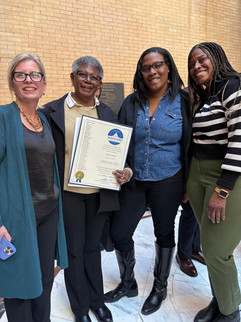


I was honored to nominate Gail Council for the annual Black Excellence on the Hill Awards hosted by the Black and Latino Legislative Caucus. Gail has dedicated her life to advocacy and the protection of families in crisis. For nearly three decades, Gail served as a Senior Family Advocate at the Guidance Center in Cambridge, now Riverside Community Care, including more than 20 years working directly with survivors of domestic violence and their children. Even in retirement, Gail continues to organize food and clothing drives and to support domestic violence prevention and awareness efforts.







Today, I had the pleasure of touring the Community Art Center, a vibrant cultural hub serving the Port neighborhood and communities across Cambridge. Founded in 1937, the Community Art Center has long been a welcoming space where creativity, culture, and community come together, with a strong commitment to uplifting marginalized voices and expanding access to the arts. Their work goes beyond showcasing art; it creates opportunities for connection, storytelling, and empowerment right here in the Port.
Arts and culture are essential to building strong, inclusive neighborhoods. I’m grateful to the team at the Community Art Center for their leadership and for ensuring that the arts remain accessible to everyone in our community. I look forward to continuing to support their important work.
Public Health Updates
15 States Sue HHS Over Federal Childhood Vaccine Recommendation Changes
On Tuesday, 15 majority Democratic states filed a lawsuit against the Department of Health and Human Services (HHS) and the Centers for Disease Control (CDC), challenging recent federal changes to the US childhood immunization schedule and the overhaul of the CDC vaccine advisory process. The complaint focuses on the administration’s January 5 decision, which removed childhood vaccine recommendations for immunizations against influenza, rotavirus, hepatitis A and B, meningococcal disease, and respiratory syncytial virus (RSV). These vaccine recommendations are usually overseen by the federal Advisory Committee on Immunization Practices (ACIP), which guides states in school-required and insurance-covered vaccines. However, in June 2025, HHS Secretary Robert F. Kennedy Jr. fired all 17 members of ACIP and replaced them with many vaccine skeptics. This lawsuit argues that the administration’s new vaccination schedule was not based on scientific evidence but instead on simple comparisons to other countries, such as Denmark, which has a much smaller population and offers national healthcare. Please note that in November 2025, the Massachusetts Legislature passed a supplemental budget that included language authorizing the Massachusetts Department of Public Health (DPH) to set a state-level vaccine schedule independent of the CDC’s recommendations, ensuring that adolescents can continue to access evidence-based vaccines. The Division of Insurance (DOI) and DPH also issued a joint bulletin requiring health insurers operating in Massachusetts to guarantee coverage for any vaccine recommended by the state. Click here to learn more about DPH’s childhood vaccine schedule, and here to learn more about the vaccine DPH currently recommends independently from federal recommendations.
Group Insurance Commission Eliminates Coverage for GLP-1 Drugs
In a 10-7 vote, the Group Insurance Commission (GIC), which administers health insurance benefits to over 460,000 state employees, decided to remove coverage for GLP-1 drugs prescribed to treat obesity. This decision aligns with other Massachusetts insurers who have recently removed GLP-1 benefits, including Blue Cross Blue Shield of Massachusetts. GLP-1s are a class of drugs that primarily assist in blood sugar level management in people with Type 2 diabetes; they have recently been found to be a highly effective weight management medication. High costs associated with GLP-1s, like Wegovy and Zepbound, coupled with their increasing popularity, have led to drastically higher health care spending. The GIC currently spends $46 million on GLP-1s as a weight-management medication for 22,000 members, and one-third of the 12% increase in GIC premiums last year is attributed to GLP-1 coverage. The GIC will continue to cover GLP-1s weight loss until July, after which they will only cover GLP-1s for people with diabetes and other conditions. GIC commissioners know that eliminating GLP-1 benefits will be disruptive to members and recognize the need to provide an “off-ramp” by developing new treatment plans.
DPH Announces First Two Confirmed Measles Cases in MA This Year
The Massachusetts Department of Public Health (DPH) reported today that two cases of measles have been diagnosed in residents, marking the first confirmed cases in Massachusetts this year. Measles, also known as rubeola, is a contagious viral illness. One case was diagnosed in an adult who lives in Greater Boston who recently returned from international travel. State and local officials are working to identify people in the region who may have been exposed to the virus. The other case involved a child who was exposed to measles and diagnosed out of state. This child has not returned to Massachusetts and does not appear to have exposed anyone in the state to the virus. State data shows that the last confirmed measles case in Massachusetts occurred in 2024. Nationally, the U.S. is at risk of losing its measles elimination status, which requires at least 12 months without disease transmission in that region. About 90% of people exposed to measles who are not immune will develop measles. Because measles is highly contagious, at least 95% of the population must be vaccinated to achieve herd immunity. In Massachusetts, it is recommended that individuals be vaccinated against measles by receiving the MMR vaccine at 12-15 months of age, followed by a second dose in kindergarten. Both the CDC and the Massachusetts Department of Public Health recommend that everyone receive two doses of the Measles, Mumps, and Rubella (MMR) vaccine. Those who complete the full MMR vaccine course are typically considered to be protected against measles and rubella for life, while immunity to mumps may wane over time. For more information about measles and the MMR vaccine, visit https://www.mass.gov/info-details/measles.
UMass Chan Evaluation Finds over $500M in Savings and Improved Health Outcomes through MassHealth’s Waivers
A new evaluation by researchers at UMass Chan Medical School has found that over $500 million in savings, improved physical and behavioral health outcomes, and lower hospitalization rates for MassHealth members. The projected savings over the next 10 years are estimated at $962 million. These savings and improved health care outcomes were facilitated by MassHealth’s 2017-2022 Section 1115 Demonstration Waiver (waiver). With approval from the Centers for Medicare & Medicaid Services (CMS), Section 1115 demonstration waivers allow states the flexibility to implement Medicaid programs, provided they further key federal Medicaid objectives. Massachusetts has been using section 1115 waivers since 1997, utilizing them as an essential tool to maintain near-universal insurance coverage. UMass Chan’s most recent evaluation specifically analyzed the impact of healthcare system reforms operationalized through the 2017-2022 waiver, which featured $512 million in savings from MassHealth’s shift from paying health care providers for providing individual members' services to paying Accountable Care Organizations (ACOs), a monthly per-member lump sum with incentives for better health outcomes. For more details and the complete results of the evaluation of MassHealth’s 2017-2022 Demonstration Waiver, visit: Mass.gov/Historic1115Demonstration.
New Study Ties Abortion Restrictions to Increased Maternal Mortality Rates
A new study presented at the Society for Maternal-Fetal Medicine annual meeting found that anti-abortion laws are associated with increased deaths among both new and expecting mothers. Researchers reviewed state-level data from the deaths of 22,380 pregnant people aged 15-54 years old between 2005 and 2023, focusing on deaths that occurred during pregnancy or 42 days postpartum. Researchers stratified the data to compare deaths that occurred before and after the enactment of the 10 most common state-level abortion laws. These include banning the use of Medicaid funding for abortion, requiring a waiting period before receiving an abortion, and limiting providers who can provide abortion care to only physicians. Researchers stated that the associations they identified between abortion restrictions and maternal death were broad, impacting deaths of any cause, ranging from cardiovascular disease to violence. These data further highlight how maternal health cannot be separated from reproductive health policies and the clear adverse impacts of anti-abortion laws in the United States.
New Clinical Shows Promising Results for First Medication to Treat Preeclampsia
Researchers are reporting early, promising results for the potential first pharmaceutical drug for preeclampsia, a serious pregnancy complication. The condition causes the mother’s blood pressure to become abnormally elevated and is a leading cause of maternal morbidity and mortality worldwide, with at least 42,000 maternal deaths a year. Symptoms of preeclampsia include high blood pressure, high levels of protein in urine that indicate kidney damage (proteinuria), or other signs of organ damage. A stroke medication called DM199 from DiaMedica Therapeutics was tested to lower blood pressure in pregnant mothers with preeclampsia. This drug stabilizes the lining of blood vessels and appears to effectively lower maternal blood pressure, with mild side effects. Additionally, DM199 doesn’t appear to cross into the placenta or breastmilk, so it likely doesn't reach the baby. Current management of preeclampsia focuses on monitoring both the mother and the baby, and in severe cases, it can require early delivery to protect the health of the mother and the fetus. Currently, there is no approved drug that can safely treat it. If validated in larger clinical trials, this emerging treatment could inform updates to clinical practice and improve outcomes for pregnant people at risk of severe complications.
Cambridge Updates

WinterMix Events
The Community Development Department’sPublic Space Lab, with support from Cambridge Recreation, is presenting Winter Mix – a new series of free community events that will take place throughout the month of February. For additional event details, including programming and activities, as well as time-sensitive updates, visit cambridgema.gov/wintermix.
An outdoor Winter Mix event will take place each Thursday in February, from 5:30-7:30 p.m. at Joan Lorentz Park. All outdoor events will feature warm food and hot chocolate, winter games, fire performances by MIT Spinning Arts, and themed activities.
Three weekend events will take place inside Cambridge public schools on Saturdays from 3-5 p.m., featuring crafts, warm food and beverages, games, music, and other entertainment
2026 Scholarship Applications Now Being Accepted
Applications for the 2026 City of Cambridge Scholarship are being accepted through March 4, 2026. This annual fund provides financial assistance to Cambridge residents pursuing post-secondary education. To be eligible, applicants must be Cambridge residents and be attending, admitted to, or have an application pending at an accredited institution beyond high school by May 2026. The award applies to the 2026–2027 academic year, and prior recipients are not eligible. Applications are reviewed based on academic achievement, financial need, community involvement, extracurricular activities, and special circumstances.
Winter Warming Center Open Dec. 1 - April 30
The Cambridge Winter Warming Center is open through Friday, April 30, at 437 Green St. (the back entrance of the Senior Center in Central Square). The Warming Center will be open every day of the week from 7 p.m. to 7 a.m. as a welcoming drop-in center where unsheltered adults can spend the night safely during the winter months. At the Winter Warming Center, guests will have access to beverages and a meal, bathrooms, and a mat to rest on the floor. They will also be able to connect with first responders regarding serious health and safety concerns. Additionally, information about other community services will be available, including direct access to the Cambridge Coordinated Access Network (C-CAN) to be assessed for potential housing opportunities.
Recent Press
Juliet Schulman-Hall, MassLive
As Harvard University students stayed warm inside their dormitories and watched inches of snow fall outside their windows this month, some security guards and custodians slept over at work to make sure they’d be able to get to campus. The custodians’ contract expired in mid-November after weeks of failed negotiations, a one-day strike and the admission of a federal mediator.
At noon on Thursday, hundreds of Harvard custodians and allies gathered with U.S. Rep. Ayanna Pressley, D-7th District, and state Rep. Marjorie Decker, D-25th Middlesex, outside a Harvard Square building, where negotiations on union contracts were beginning after a two-month hiatus.
Decker said the contract represents only a small fraction of the institution’s growing endowment.
“While we fight for their right to academic freedom, which we believe in, we need them fighting for economic justice right here at home,” Decker said.
Wyatt Zurline, Harvard Crimson
A proposed ballot measure to reinstate rent control statewide is moving closer to voters this November — and splitting the Cambridge lawmakers who represent the city on Beacon Hill.
State Rep. Marjorie C. Decker, who has represented the 25th Middlesex District — which covers Harvard’s Cambridge campus — since 2013, voiced support for the proposal while emphasizing the need for “a broader strategy to expand supply and affordability.”
“Immediate tenant protections must be paired with a broader strategy to expand supply and affordability, but inaction is not an option,” Decker said.
Services and Resources
Immigration Resources
MIRA Immigration Helpline: Through this helpline, MIRA provides individuals and community-based organizations with answers to the most commonly asked immigration questions. You can contact the helpline by scheduling a call online or leaving a voicemail at 508-293-1871.
Guidance for Immigrants and their Employers: MLRI and MIRA have created guidance to prepare immigrants and their employers for ICE interactions. Here is the guidance; please share it widely with your networks.
LUCE Defense Hotline: If you see or suspect ICE or federal agents are in your neighborhood, contact the LUCE Immigrant Defense Network’s Hotline, which operates in several languages, at 617-370-5023 from 9am-5pm. A trained operator will ask for details, then dispatch a volunteer to the site, who will attempt to verify the situation and the presence of ICE. You can learn more about LUCE and their upcoming volunteer trainings at lucemass.org.
De Novo Center for Justice and Healing: De Novo is a Cambridge-based nonprofit that provides free civil legal assistance and affordable psychological counseling to people with low incomes. Importantly, De Novo also offers high-quality, free legal assistance to low-income immigrants and asylum seekers who are living in Massachusetts. You can learn more about their immigration related services here, and their general mission and work at denovo.org.
Reliable sources of information on policy changes:
Food Assistance Resources
If you need help meeting your or your family’s nutritional needs, you are not alone. You can find information on Cambridge food pantries, free community meals, and other local food resources here.
Mass.gov/SNAPFreeze provides resources for people in need of food assistance and ways for residents and businesses to donate or volunteer.
Project Bread’s FoodSource Hotline is free, confidential, and has counselors available in 180 languages. You can call or text 1.800.645.8333 to access the hotline, or chat with a counselor online using the “Live Chat” feature at the bottom of the website.
Greater Boston Food Bank has information on food assistance as well as opportunities to donate and to volunteer.
Cambridge Food Resource Guide has information about food pantries, free community meals, food resources for older adults, and more, and is available in 8 languages.
Reproductive Care, Gender-Affirming Care, and Crisis Resources
These are a few of the resources and help lines available for people seeking reproductive or gender-affirming health care or experiencing a crisis. Help is available, and you are not alone.
MBTA Income-Eligible Reduced Fare Program
The MBTA’s income-eligible reduced fare program offers reduced fares to riders between the ages of 18 and 64 enrolled in an approved state assistance program, including:
Emergency Aid to the Elderly, Disabled & Children (EAEDC)
Transitional Aid to Families with Dependent Children (TAFDC)
MASSGrant
MassHealth
Supplemental Nutrition Assistance Program (SNAP)
You can learn more about the program and how to apply at mbta.com/fares/reduced/income-eligible.
Intimate Partner Abuse Prevention Helpline
This initiative is designed to prevent intimate partner violence by fostering accountability and change in people who harm or may harm their partner. You can find more information at 10to10helpline.org or by calling 877-898-3411.
SafeSpot Overdose Prevention Helpline
SafeSpot is a virtual spotting/overdose detection service for people who use drugs. Learn more at safe-spot.me or access it by calling 800-972-0590.
Alzheimer's Association Helpline
The Alzheimer’s Association is a nonprofit that provides support, research, and care for Alzheimer’s and dementia. It is available 24/7 for caregivers and patients. More information is available at alz.org, or by calling 800-272-3900.
MassLegalHelp.org is a resource to help Massachusetts residents learn about their legal rights. The website does not offer legal advice or answer individual questions, but has a page about options for finding a lawyer. It does provide resources for those facing legal issues, such as a landlord refusing to make repairs, appealing the denial of SNAP benefits, and questions about getting a CORI sealed.
Free Shuttle Bus Transportation Available to Older Adults in Cambridge
Council on Aging (COA) Bus Service
On Mondays and Wednesdays, the shuttle bus is available to residents who live in Central Square (02139) and East Cambridge (02141)
On Tuesdays and Thursdays, the shuttle bus is available to residents who live in North Cambridge (02140) and West Cambridge (02138)
To reserve a seat on the shuttle bus, call the Council on Aging’s Transportation Office at 617-349-7254. Please make reservations at least 2 business days in advance. COA staff will share a morning pickup time with residents once reservations are complete.
Council on Aging (COA) Mall Shopping Group Transportation
The Mall Shopping Group shuttle bus provides free transportation to Arsenal Yards in Watertown, which has a variety of retail shops, grocery stores, and restaurants to explore. The shuttle can also bring residents to the Watertown Mall Plaza, which includes a Target and Registry of Motor Vehicles.
This trip alternates between Tuesdays and Wednesdays each week. The shuttle leaves the Cambridge Senior Center at 10:30 a.m. and returns to the Senior Center at 1 p.m. Home pickup is available upon request.
To reserve a seat on the shuttle bus for the Mall Shopping Group, call the Council on Aging’s Transportation Office at 617-349-7254. Please make reservations at least 2 business days in advance.
Door2Door by SCM Transportation
Door2Door Transportation by SCM is available to Cambridge residents who are 60 years or older or residents who have a mobility impairment. The transportation service provides rides to medical appointments and grocery stores. Door2Door is also piloting a weekly shuttle service to the Target on Somerville Ave. in Somerville.
For reservations, call 617-625-1191 between 9 am and 1:30 pm on weekdays, excluding holidays. When you hear the greeting, press “0” to speak to reservations.
Welcome Baby Boxes for Cambridge Parents
The Center for Families provides Baby Boxes to eligible Cambridge parents who have a child under one year old.
The Baby Boxes include diapers, wipes, children's books, and community resources for families.
Parents can customize their Baby Box by choosing items sized for a 0–6-month-old or 6–12-month-old. They can also select a baby carrier, diaper backpack, and breastfeeding supplies for their Baby Box.
If you’re interested in signing up for a Welcome Baby Box, please fill out this form or contact welcomebabyboxes@cambridgema.gov.
As always, please contact me with questions or concerns at Marjorie.Decker@mahouse.gov.
Sincerely,
Marjorie
