
Friday, March 20th Legislative & Public Health Updates
- 18 hours ago
- 21 min read
Dear friends,
I am writing to you today with legislative, public health, and Cambridge updates. If you want even more updates, please follow me on Instagram @repdecker.
On Thursday, March 26, I will be holding two sign-making parties for the “No Kings” rally coming up on March 28. Stop by whichever location is most convenient for you — we will provide supplies and pizza, so just bring your ideas, energy, and friends!
Cambridge Community Center
5 Callender St
6:00pm - 7:30pm
Baldwin Community Center
20 Sacramento St
5:30pm - 7:00pm

Table of Contents
Legislative Updates
A Glimpse at the Past Week
Public Health Updates
Cambridge Updates
Services and Resources
Legislative Updates
Fair Share Supplemental Budget
On Wednesday, the House voted to approve a $1.8 billion supplemental budget that invests $885 million in public transportation and $417 million in public education, and funds several Fiscal Year 2026 (FY26) deficiencies. The bill also delays conforming to the federal corporate tax changes that were passed by Congress in the OB3 Act last year, which will represent approximately a $400 million revenue loss for the Commonwealth when fully implemented. If the ballot question to lower the state income tax from 5 percent to 4 percent passes in November, which would result in a $5 billion revenue loss when fully implemented, the Commonwealth would permanently decouple from these tax credits, preventing them from going into effect.
The $1.8 billion bill is funded in part by $1.3 billion from excess Fair Share surtax funds to invest in public transportation and education. Some Fair Share highlights include $740 million for the MBTA, including $20 million for low-income reduced fares; and $417 million for education, including $150 million for Early Education Child Care costs, $20 million for Green SchoolWorks program to help schools with clean energy upgrades, and $18.3 million for Financial Aid Supplements. The bill also allocates $507 million from the General Fund, including $300 million for the Group Insurance Commission (GIC) and $41.6 million for DTA caseworkers.
Three amendments that I filed were adopted, which will:
Extend the Violence Prevention Commission report deadline to July 31, 2026. The Commission, which I co-Chair, was established by the 2024 Gun Safety omnibus. We are tasked with making recommendations to strengthen the funding structures for violence prevention services in the Commonwealth and studying the feasibility of a statewide grant to implement a public health and safety approach to preventing targeted violence. The report is nearly complete, and I am grateful that this extension was adopted so that we can finalize this important work.
Invest $100,000 in the Science Club for Girls, which offers hands-on learning opportunities, mentorship, and out-of-school STEM education for girls and gender-expansive youth. A recent longitudinal study found that 99% of the program’s alumni attended college and 63% studied STEM (76% if STEM-adjacent majors like Economics and Psychology are included). I am proud to have secured an earmark for Science Club for Girls in the FY26 budget after they suffered substantial cuts in foundation funding.
Provide $250,000 for the Cambridge Community Center to establish one of the first carbon-neutral resilience hubs in the United States. Resilience Hubs are community-serving facilities augmented to support residents, coordinate communication, distribute resources, and reduce carbon pollution while enhancing quality of life. I have been supporting this project for several years, and you can learn more about it here.
I also filed an amendment to extend parity in MassHealth coverage to certified nurse midwives (CNMs) under contracts with accountable care organizations (ACOs) and managed care organizations (MCOs). This is a clarification to the 2024 maternal health law that I crafted and championed; the current statute requires parity for CNMs, but not specifically for MCOs and ACOs. While the amendment was not adopted for this supplemental budget, I am in ongoing conversations with MassHealth and House leadership about this issue and will continue working to advance it.
Thank you to everyone who reached out and shared what was important to you in this bill — I co-sponsored two amendments that were brought to my attention by constituent emails and phone calls. While the amendments to ban Native American mascots and to give families the option of participating in the Massachusetts 529 College Savings Plan without investing in fossil fuels were not adopted, the bills are still moving through the legislative process and I am advocating for them as a co-sponsor. I also co-sponsored amendments for $25,000 for skill-building workshops at the Margaret Fuller House, $25,000 for the Community Art Center School Age Child Care Program, and $25,000 for the Peabody Elementary/Rindge Ave Upper School, all of which were adopted.


I was very happy to speak at The 84 Movement’s Ending Nicotine Use for the Future (ENUFF) Day of Action. The 84 represents the 84% of Massachusetts high school youth who did not smoke when the movement began. As of 2023, almost 97% of MA high school youth do not smoke cigarettes, and 84% do not vape. In addition to fighting the tobacco and vaping industries by educating their peers and advocating for public health policies and funding, the 84 Chapters confront the industries’ racist tactics and center racial justice in their programs.
I worked successfully in 2019 to add a 75% excise tax to vaping products, which was fueled by my deep concern about the rapid increase in vaping rates among young people, as well as by my anger about children being targeted by vaping ads. More recently, I have been working to address youth nicotine use by filing An Act protecting youth from nicotine addiction (H.3074), which would increase the taxes on cigars and cigarettes; and An Act relative to protecting youth by closing the synthetic nicotine loophole (H.3075) which would amend the definition of “smokeless tobacco” to tax synthetic nicotine products, including pouches. I appreciate all the youth advocates who are dedicated to protecting their own and their peers’ health, and I remain committed to reducing the influence of tobacco and vaping companies on our communities.


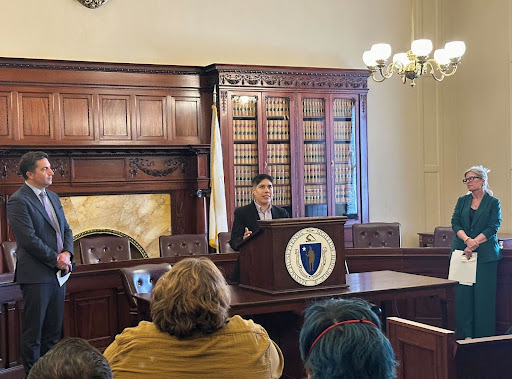
I was grateful to join an LGBTQ+ Health Equity panel hosted by Fenway Health and GLAD during National LGBTQ+ Health Awareness Week. At a time when federal actions are increasingly targeting LGBTQ+ individuals — especially transgender people and young people — we had an important and urgent conversation about what’s at stake. Thank you to GLAD and Fenway Health for bringing me, Rep. Lewis, Rep. Montaño, and Sen. Cyr together for this forum.
The panel focused on the importance of HIV prevention and gender-affirming care for LGBTQ+ health equity in Massachusetts. I am working in close partnership with my colleagues, providers, and advocates to advance An Act to address barriers to HIV prevention (H.1245), which would remove systemic barriers to prescribing PrEP, and An Act to strengthen the control of contagious and infectious diseases in the Commonwealth (S.717) strengthens our public health infrastructure and ensures that we are equipped to center equity in our response to disease outbreaks.
Last year, I filed a budget amendment with Rep. Montaño to establish the Affirming Health Care Trust Fund, which offers a national model for protecting access to this care. The trust fund — along with an initial $1 million allocation — was included in the FY26 state budget and is the first in the nation dedicated exclusively to funding gender-affirming health care. With discussions around the FY27 budget underway, I remain committed to ensuring that providers and patients have access to the care and resources that they need to thrive.
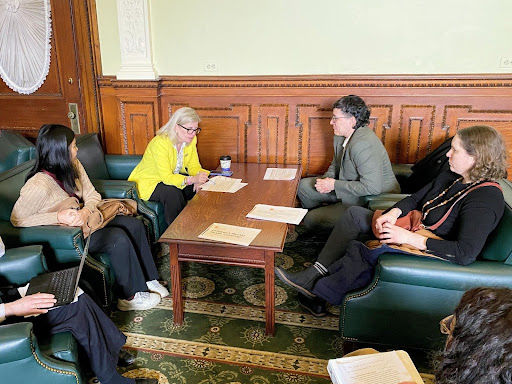


Thursday afternoon was packed with meetings to discuss the Fiscal Year 2027 (FY27) state budget. These conversations play a critical role in informing my advocacy for programs that serve and strengthen our communities. As we continue to navigate federal funding cuts and other economic uncertainty, my focus remains on mitigating harm by reprioritizing where we allocate resources.
I’m grateful to the organizations that spoke with us about how the Legislature can respond to the needs of those they serve, especially in the face of federal cuts to many of the services they provide, including Fenway Health, Children’s Health Watch, Children’s Mental Health Campaign, the Multicultural AIDS Coalition, and Cambridge Health Alliance.
A Glimpse at the Past Week

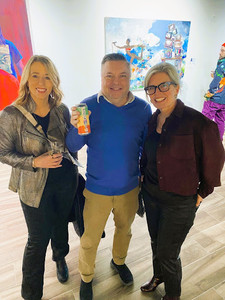


On Friday night, I attended the Signed! Central event hosted by the Central Square Business Improvement District and Street Theory Collective to celebrate the remounting of the iconic Central Square sign in the heart of the Square. Artist Kenji Nakayama refurbished the multi-colored sign, restoring a beloved landmark to Cambridge, Massachusetts. Congratulations to everyone involved in bringing this vibrant piece of Central Square’s identity back to the community!





I was proud to join the members of SEIU 32BJ at their monthly meeting to celebrate their recent contract victories with Harvard University. These wins reflect the power of workers coming together to advocate for fair wages, strong benefits, and dignified working conditions. I was especially grateful to be recognized for my support during the contract negotiations, and it meant a great deal to share that moment with my mother—a former SEIU member and shop steward.
All workers deserve a living wage, and it was an honor to stand alongside custodians, security guards, and advocates fighting for fair contracts that reflect their dedication. This agreement is particularly meaningful because it delivers the first wage increase for custodians since the pandemic, when they were rightly recognized as essential workers keeping our campuses running under incredibly challenging circumstances. Earning a living wage is fundamental, and I’m proud to stand with the workers whose commitment and organizing made this victory possible.


It is always a pleasure to be in community with the members of Mothers Out Front. I was glad to join their Cambridge general interest meeting at the library this past Saturday, where neighbors came together to talk about climate action, organizing, and building a healthier future for our families and communities. I’m grateful for the continued leadership of local advocates who are working every day to move climate solutions forward.


I had a wonderful time attending the LGBTQ+ Youth Celebration co-hosted by YWCA Cambridge and the Cambridge LGBTQ+ Commission at the Cambridge Public Library. This special program centered on LGBTQ+ youth and created a joyful space for young people to express themselves, build community, and celebrate who they are.
Representation matters—especially for young people whose identities have been, and continue to be, marginalized and attacked. Coming together to affirm and uplift those identities sends a powerful message that our LGBTQ+ youth are valued, supported, and celebrated. And I have to say, it was also a lot of fun getting the chance to strut on the catwalk with everyone. Thank you to all of the organizations that made this event possible.




I had the pleasure of attending Ireland and America 250: Reflections on the Enduring Ireland–U.S. Relationship at the JFK Library on St. Patrick’s Day.
The evening was a powerful reminder of the deep, enduring ties between Ireland and the United States — rooted in shared values, a commitment to human rights, and the importance of strong international relationships. It also highlighted how culture and connection across borders shape who we are.
The Irish experience reflects something even broader: the story of a diaspora that speaks to the strength, resilience, and contributions of immigrants from around the world. Our nation is stronger because of those who came seeking opportunity and helped build a more just, vibrant, and inclusive United States.

Wednesday was the 30th Annual Immigrants’ Day at the State House, organized by the Massachusetts Immigrant and Refugee Advocacy (MIRA) Coalition. I am deeply grateful to everyone who took time out of their day to bring their lived experiences and policy expertise directly to decision-makers.
I am very encouraged to see the PROTECT Act moving forward this week, which is a comprehensive bill designed to ensure equal and just civil processes for immigrants across the Commonwealth. Not only am I a co-sponsor and strong supporter of the PROTECT Act, but it reflects legislation that I filed with Rep. Day to limit the sharing of personal information for immigration enforcement purposes and strengthen guardrails around how state agencies interact with federal authorities. It ensures that court staff and prosecutors will not alert outside agencies when someone comes to court, unless federal law requires them to do so. It also requires written informed consent and access to legal counsel before immigration questioning can occur in state or local custody.
I was proud to be one of four non-members of the Massachusetts Black and Latino Legislative Caucus who was invited to join them when they launched the PROTECT Act, and I was honored to stand with the Caucus as they testified at a public hearing and announced this legislation at their press conference yesterday. As I have shared in many conversations and emails, I have been and continue to be actively engaged in efforts to protect our immigrant neighbors, friends, and family members. I respect the leadership of the Black and Latino Legislative Caucus on this issue and am working closely with them while also sharing the suggestions and concerns my constituents have raised about how the bill could be improved.





On Wednesday, I joined the LinkedIn Live program Women’s History in the Making: Lawmakers Advancing Menopause Rights, hosted by the Menopause Education Center and moderated by State Senator Lori Urso of Rhode Island. I was honored to take part in the conversation alongside leaders advancing menopause policy across the country, including State Senator Adriane Johnson of Illinois, Councilmember Nina Ahmad of Pennsylvania, State Senator Stella Pekarsky of Virginia, Delegate Kathy Tran of Virginia, and my colleague State Representative Joan Meschino of Massachusetts.
Our conversation highlighted the growing national momentum to address menopause as a major public health and workforce issue affecting millions of women. I was proud to join colleagues from across the country who are working to ensure individuals experiencing menopause receive the care, information, and workplace support they deserve.
During the discussion, I shared how, An Act expanding access to perimenopause and menopause care, the legislation I filed in Massachusetts takes a holistic approach to menopause care, including provider education, public awareness, workplace protections, and improved treatment coverage. I spent over a year learning from and working closely with stakeholders, clinicians, advocates, and subject-matter experts to develop comprehensive legislation because these challenges require coordinated, systemic solutions. I was very intentional in centering the voices and lived experiences of women across the Commonwealth while shaping this bill — particularly women of color, who enter menopause earlier and experience more severe symptoms. I will share updates as the bill advances through the legislative process.





I had the opportunity to meet with Transition House twice this week. On Monday, a delegation from Transition House came to the State House as part of Jane Doe Advocacy Day. It was an honor to speak with survivors, volunteers and staff about the real hurdles facing survivors today. It was incredible to experience their resilience and strength.
I then had the privilege to facilitate a conversation between Ireland’s Minister for Foreign Affairs and Trade, Helen McEntee, Mayor Sumbul Siddiqui, and staff of Transition House, including Executive Director Sarah Gyorog, on Wednesday evening. I am grateful to Minister McEntee for sharing how domestic violence and abuse are being addressed in Ireland through initiatives at public safety offices and at the national level.
We then visited an emergency shelter administered by Transition House and heard directly from survivors who live there and the staff who provide around-the-clock trauma-informed services. Thank you to Transition House for hosting this meeting and to Minister McEntee for taking time out of her trip to the United States to visit and learn about how Massachusetts is addressing violence.
As some of you may know, I have been a longtime champion of the Massachusetts Office of Victim Assistance (MOVA), which provides essential funding to survivor and victim service agencies in the Commonwealth. In 2021, Congress failed to appropriate $60 million to restore funds necessary for Victims of Crime Act (VOCA) programming in Massachusetts that had been depleted over time. I led the House’s effort in ensuring the VOCA Bridge was fully met, as the Legislature stepped up three times to provide $20 million installments. If the VOCA Bridge were not fulfilled, over 100 direct service programs funded by MOVA would see cuts in programming, including Transition House.
I have also filed An Act to enhance the rights of crime victims in the Commonwealth for the past 4 legislative sessions in partnership with the Office for Victim Assistance. This bill clarifies and revises the current language in the Victim Bill of Rights to address unfulfilled commitments, codifies practices by criminal justice agencies that have evolved since the statute was created in 1984, and adds new rights to the Bill of Rights that reflect the needs of crime victims today.





On Thursday morning, I spoke at the Children’s League of Massachusetts (CLM) Transition Age Youth Hill Day as the lead sponsor of An Act relative to expungement of juvenile and young adult records, one of CLM’s priority bills this session. The bill would make non-conviction and non-adjudication juvenile records eligible for expungement and limit ineligible convictions to those involving death, serious physical harm, or sex-based offenses.
Juvenile records—despite not indicating guilt or a public safety risk—can follow young people for life, creating barriers to education, employment, housing, and even becoming a foster parent, including in cases where charges were dismissed.
This legislation builds on the progress we’ve made. The 2018 Criminal Justice Reform Act created initial expungement opportunities for individuals under 21. In 2020, through the police accountability law, I secured language that created a pathway for the expungement of juvenile records. This bill takes the next step by expanding and clarifying that foundation—ensuring more young people can access a meaningful second chance. After years of incremental progress, this is how we finish the job.


I spoke at Mass NOW’s Menstrual Equity advocacy day on Thursday about the critical need to address period poverty in Massachusetts and the actions that we are taking in the Legislature. Period poverty – or limited access to safe and clean menstrual products, sanitation facilities, and menstrual hygiene education – impacts 1 in 4 women in Massachusetts and can lead to health complications and mental distress. Rising prices for sanitary pads and tampons force many to choose between essential hygiene products and other necessities.
I co-filed An Act concerning disposable menstrual products in schools (H.684) with Representative Jeff Roy this session. This bill would require menstrual products to be provided in public schools. As House Chair of the Joint Committee on Public Health, I reported out a comprehensive bill, An Act to increase access to disposable menstrual products, that threads together the different menstrual equity bills this session, to ensure menstrual products are provided in K-12 public schools, public universities, shelters, correctional facilities, and state buildings.
Thank you to Mass NOW for inviting me to speak and for your tireless advocacy on this important issue. I look forward to continuing to promote autonomy and dignity, fostering period equity, and ensuring menstrual equity is a reality in Massachusetts.


It was great to be in community with powerful women at EMERGE Massachusetts’ Women Who Dared event on Thursday evening in Harvard Square. Congratulations to Tara Healey, the inaugural recipient of the Trailblazer Award, in recognition of her extraordinary work in Massachusetts politics and her unwavering commitment to building stronger, more connected communities. Throughout her career, Tara has been a tireless advocate, using her voice and leadership to open doors for others, strengthen civic engagement, and bring people together across movements and institutions. Her work has not only helped shape the political landscape in Massachusetts but has also fostered a sense of belonging and collective purpose that empowers communities to lead and thrive.

I spoke at a meeting of the Porter Square Neighbors Association about renovating and repainting Gift of the Wind, the iconic sculpture in Porter Square. I am committed to ensuring this unique community treasure is preserved in collaboration with the MBTA.
Public Health Updates
Massachusetts Federal Judge Strikes Down ACIP Children’s Vaccine Schedule Recommendations
On Monday, a Massachusetts federal judge blocked the Trump administration from implementing a number of vaccine decisions made over the last year by Health and Human Services (HHS) Secretary Robert F. Kennedy Jr. Notably, the ruling reversed all decisions made by the members of the Advisory Committee on Immunization Practices (ACIP) appointed by Secretary Kennedy. ACIP is a Centers for Disease Control and Prevention (CDC) panel typically composed of public health experts who make recommendations on vaccine use and vaccine-preventable diseases nationwide. Last year, Secretary Kennedy fired all 17 members and appointed his own, many of whom have expressed vaccine-skeptic views. Since the new ACIP membership, the committee has recommended changes to the children’s vaccine schedule, including new restrictions on the combined MMRV vaccine that protects against measles, mumps, rubella, and chickenpox. Overall, Kennedy’s appointments slashed the number of recommended shots for children from 17 to 11. The panel also recommended against flu vaccines containing the preservative thimerosal, which is used to prevent microbial contamination of vaccines, despite public health experts finding no evidence that low doses of it cause harm. The ruling reversed all decisions made by the panel, including ACIP’s recommendations for the children's vaccine schedule.
AG Campbell Files Motion to Enforce Trump Administration Disbursal of School Mental Health Grants
Massachusetts Attorney General Andrea Joy Campbell filed a motion to enforce on Wednesday, asking a federal court to enforce a previous order requiring the U.S. Department of Education (DOE) to set aside its unlawful discontinuation decisions on school mental health funding programs established by Congress and to issue new decisions in full compliance with the law. In April 2025, the DOE notified grantees that their funding would be cancelled for alleged conflicts with the Trump administration’s priorities. In response, Attorney General Campbell joined a coalition of 16 attorneys general in filing suit against the DOE for illegally withholding the congressionally-approved funding. The federal judge in that case ruled that the DOE unlawfully and abruptly discontinued previously approved grants. In March 2026, the DOE awarded grantees six months of funding, rather than the full year. According to the coalition, some grantees will lose staff and will be unable to properly plan and budget for the fall semester without the certainty of a year of funding. The coalition is awaiting a decision by the federal court.
DPH Data Highlights Increase in Abortions Provided by Massachusetts Providers, Driven by Out-of-State Patients
Since the Supreme Court’s decision overturning Roe v. Wade in 2022, the number of abortions provided by doctors and nurse practitioners in Massachusetts has more than doubled, according to new data by the Massachusetts Department of Public Health. Abortion providers reported over 49,450 procedures in 2024, up from 24,000, a 103% increase. Remote access to abortion medicine largely contributed to the increase, involving out-of-state patients as telehealth became a dominant method of delivery. In addition, 82% were induced with medications. Telehealth abortions in Massachusetts accounted for 30,900 cases in 2024. This new data matches data collected on a national basis. According to the most recent #WeCount report from the Society for Family Planning, the total number of abortions in the United States has increased since Roe v. Wade was overturned, and an increasing percentage of abortions are via telehealth. Since then, twelve states have enacted total abortion bans, and four more have six-week bans, leading more patients to seek online abortion care from states with shield laws. Shield laws protect providers from facing legal penalties for providing abortion care to out-of-state patients, no matter the abortion policies of those patients’ home states. Massachusetts enacted its shield law in 2022 after the Supreme Court ended federal legal protection for abortion in Dobbs v. Jackson Women’s Health.
EPA Proposes Weakening Biden-Era Emission Standards for Carcinogenic Gas
The Environmental Protection Agency (EPA) recently proposed amending the National Emissions Standards for Hazardous Air Pollutants (NESHAP) to loosen regulations on ethylene oxide emissions from commercial sterilization facilities. Ethylene oxide is a gas used to sterilize approximately 50% of all sterile medical devices in the United States. Breathing ethylene oxide can lead to nausea, dizziness, and fatigue, and long-term exposure is associated with brain and central nervous system damage. In 2024, the Biden Administration strengthened emission limits by requiring medical device sterilization plants and other facilities to install pollution controls that would reduce emissions by 90%. Notably, a disproportionate number of those living by plants using ethylene oxide are low-income, minority communities. The EPA's proposed rule would rescind risk-based standards for ethylene oxide, revise standards for aeration room ventilation systems, revise compliance demonstration requirements, and no longer require ethylene oxide to be completely captured using permanent total enclosure systems. Environmental advocacy groups have stated that the Trump Administration's actions are letting polluters off the hook and could result in higher cancer risks in communities near these facilities.
Study Finds PFAS Exposure During Adolescence May Reduce Bone Density
A new study published in the Journal of the Endocrine Society this week found that per- and polyfluoroalkyl substances (PFAS) exposure in adolescence is associated with reduced bone density. PFAS, also known as "forever chemicals," are a class of chemicals used to make products non-stick, water-resistant, stain-resistant, and grease-resistant. This study followed 218 children, measuring their bone mineral density at ages 3, 8, and 12. Researchers found that exposure to a specific PFAS, perfluorooctanoic acid (PFOA), was consistently linked to lower bone density, particularly in the forearm. The results of this study suggest that PFAS exposure during childhood may hinder children's ability to gain bone density during a key period of bone development, potentially increasing the risk of fractures and osteoporosis as they age. PFOA is one of the most common and widely studied types of PFAS; It has been designated as a hazardous substance by the Environmental Protection Agency and is considered carcinogenic to humans by the International Agency for Research on Cancer. Consequently, it is no longer manufactured in the United States.
Cambridge Updates
Panel Discussion on Queer Adoptions & Fostering in Massachusetts
The Cambridge LGBTQ+ Commission is holding a panel discussion on queer adoptions and fostering on Thursday, April 9th from 6-8:30 PM at the Cambridge Public Library (Main Branch, 149 Broadway). Registration is preferred for planning purposes but not required. To register, go to bit.ly/QueerIntentionalFamilies. Email LGBTQ@CambridgeMA.gov with any questions.

Medication Takeback Day
The Cambridge Public Health Department, Cambridge Police Department, and Cambridge Council on Aging are hosting a Medication Takeback Event on Monday, April 27 from 1:00 p.m. to 3:00 p.m. at the Cambridge Senior Center (806 Mass Ave). Personnel will be available on-site in the lobby to accept unwanted or unused prescriptions, over-the-counter meds, and vitamins. Sharps, liquids, and creams/ointments will NOT be accepted. For any questions about the event or safe medication disposal year-round, please contact Danielle McPeak, the CPHD Prevention and Recovery Specialist, at dmcpeak@cambridgepublichealth.org.
Health and Human Services Job Fair
The Cambridge Office of Workforce Development is holding a Health and Human Resources job fair on Wednesday, March 25 from 11 a.m. - 1 p.m. at the Central Square Library (45 Pearl St.). This is an opportunity to meet top employers, including ABCD Boston, Cambridge Health Alliance, Riverside Community Care, Heading Home, Inc. and Vinfen. This event is free and open to all, and no registration is required. Contact Josh Foley at 617-349-6259 or jfoley@cambridgema.gov with any questions.
Services and Resources
Immigration Resources
MIRA Immigration Helpline: Through this helpline, MIRA provides individuals and community-based organizations with answers to the most commonly asked immigration questions. You can contact the helpline by scheduling a call online or leaving a voicemail at 508-293-1871.
Guidance for Immigrants and their Employers: MLRI and MIRA have created guidance to prepare immigrants and their employers for ICE interactions. Here is the guidance; please share it widely with your networks.
LUCE Defense Hotline: If you see or suspect ICE or federal agents are in your neighborhood, contact the LUCE Immigrant Defense Network’s Hotline, which operates in several languages, at 617-370-5023 from 9am-5pm. A trained operator will ask for details, then dispatch a volunteer to the site, who will attempt to verify the situation and the presence of ICE. You can learn more about LUCE and their upcoming volunteer trainings at lucemass.org.
De Novo Center for Justice and Healing: De Novo is a Cambridge-based nonprofit that provides free civil legal assistance and affordable psychological counseling to people with low incomes. Importantly, De Novo also offers high-quality, free legal assistance to low-income immigrants and asylum seekers who are living in Massachusetts. You can learn more about their immigration related services here, and their general mission and work at denovo.org.
Reliable sources of information on policy changes:
Food Assistance Resources
If you need help meeting your or your family’s nutritional needs, you are not alone. You can find information on Cambridge food pantries, free community meals, and other local food resources here.
Mass.gov/SNAPFreeze provides resources for people in need of food assistance and ways for residents and businesses to donate or volunteer.
Project Bread’s FoodSource Hotline is free, confidential, and has counselors available in 180 languages. You can call or text 1.800.645.8333 to access the hotline, or chat with a counselor online using the “Live Chat” feature at the bottom of the website.
Greater Boston Food Bank has information on food assistance as well as opportunities to donate and to volunteer.
Cambridge Food Resource Guide has information about food pantries, free community meals, food resources for older adults, and more, and is available in 8 languages.
Reproductive Care, Gender-Affirming Care, and Crisis Resources
These are a few of the resources and help lines available for people seeking reproductive or gender-affirming health care or experiencing a crisis. Help is available, and you are not alone.
MBTA Income-Eligible Reduced Fare Program
The MBTA’s income-eligible reduced fare program offers reduced fares to riders between the ages of 18 and 64 enrolled in an approved state assistance program, including:
Emergency Aid to the Elderly, Disabled & Children (EAEDC)
Transitional Aid to Families with Dependent Children (TAFDC)
MASSGrant
MassHealth
Supplemental Nutrition Assistance Program (SNAP)
You can learn more about the program and how to apply at mbta.com/fares/reduced/income-eligible.
Intimate Partner Abuse Prevention Helpline
This initiative is designed to prevent intimate partner violence by fostering accountability and change in people who harm or may harm their partner. You can find more information at 10to10helpline.org or by calling 877-898-3411.
SafeSpot Overdose Prevention Helpline
SafeSpot is a virtual spotting/overdose detection service for people who use drugs. Learn more at safe-spot.me or access it by calling 800-972-0590.
Alzheimer's Association Helpline
The Alzheimer’s Association is a nonprofit that provides support, research, and care for Alzheimer’s and dementia. It is available 24/7 for caregivers and patients. More information is available at alz.org, or by calling 800-272-3900.
MassLegalHelp.org is a resource to help Massachusetts residents learn about their legal rights. The website does not offer legal advice or answer individual questions, but has a page about options for finding a lawyer. It does provide resources for those facing legal issues, such as a landlord refusing to make repairs, appealing the denial of SNAP benefits, and questions about getting a CORI sealed.
Free Shuttle Bus Transportation Available to Older Adults in Cambridge
Council on Aging (COA) Bus Service
On Mondays and Wednesdays, the shuttle bus is available to residents who live in Central Square (02139) and East Cambridge (02141)
On Tuesdays and Thursdays, the shuttle bus is available to residents who live in North Cambridge (02140) and West Cambridge (02138)
To reserve a seat on the shuttle bus, call the Council on Aging’s Transportation Office at 617-349-7254. Please make reservations at least 2 business days in advance. COA staff will share a morning pickup time with residents once reservations are complete.
Council on Aging (COA) Mall Shopping Group Transportation
The Mall Shopping Group shuttle bus provides free transportation to Arsenal Yards in Watertown, which has a variety of retail shops, grocery stores, and restaurants to explore. The shuttle can also bring residents to the Watertown Mall Plaza, which includes a Target and Registry of Motor Vehicles.
This trip alternates between Tuesdays and Wednesdays each week. The shuttle leaves the Cambridge Senior Center at 10:30 a.m. and returns to the Senior Center at 1 p.m. Home pickup is available upon request.
To reserve a seat on the shuttle bus for the Mall Shopping Group, call the Council on Aging’s Transportation Office at 617-349-7254. Please make reservations at least 2 business days in advance.
Door2Door by SCM Transportation
Door2Door Transportation by SCM is available to Cambridge residents who are 60 years or older or residents who have a mobility impairment. The transportation service provides rides to medical appointments and grocery stores. Door2Door is also piloting a weekly shuttle service to the Target on Somerville Ave. in Somerville.
For reservations, call 617-625-1191 between 9 am and 1:30 pm on weekdays, excluding holidays. When you hear the greeting, press “0” to speak to reservations.
Welcome Baby Boxes for Cambridge Parents
The Center for Families provides Baby Boxes to eligible Cambridge parents who have a child under one year old.
The Baby Boxes include diapers, wipes, children's books, and community resources for families.
Parents can customize their Baby Box by choosing items sized for a 0–6-month-old or 6–12-month-old. They can also select a baby carrier, diaper backpack, and breastfeeding supplies for their Baby Box.
If you’re interested in signing up for a Welcome Baby Box, please fill out this form or contact welcomebabyboxes@cambridgema.gov.
As always, please contact me with questions or concerns at Marjorie.Decker@mahouse.gov.
Sincerely,
Marjorie

