
Friday, October 24th Legislative & Public Health Updates -- and a Call to Action
- Oct 27, 2025
- 13 min read
Dear friends,
I am writing to you today with legislative, public health, and Cambridge updates. If you want even more updates, please follow me on Instagram @repdecker.
Table of Contents
Legislative Updates
A Glimpse at the Past Week
Public Health Updates
Cambridge Updates
Services and Resources
1 Million MA Residents Are About To Lose Food Assistance — Here’s How To Help
As more than 1 million residents of Massachusetts face the loss of SNAP food assistance benefits on November 1st due to the federal government shutdown, the Commonwealth is partnering with United Way to launch the “United Response Fund.” This relief fund will allow United Way to respond rapidly and strategically by providing flexible funds to community-based organizations, deploying emergency family assistance to individuals and families, and offering deeper support to nonprofit partners.
If you are in a position to donate, whether as an individual, a corporation, or a foundation, I strongly encourage you to support the Fund. Community-based organizations in need of support can apply here.
YWCA Cambridge and Transition House are holding a personal care item and gift card drive to benefit survivors during Domestic Violence Awareness Month. The flier below includes information on what can be donated, or you can click here to donate directly to Transition House if you are able and inclined to do so.

Legislative Updates
Hearing on Legislation That I Filed
The Joint Committee on Election Laws held a public hearing this week on my bill An Act requiring major policy makers to disclose donations to entities engaging in political activity (H.818). This legislation would require individuals in major policymaking positions to disclose donations over $1,000 to organizations that engage in political activity, including contributions, independent expenditures, or electioneering.
Child Welfare Reform and Protecting Public Transit Workers from Assault
On Wednesday, the House voted to pass comprehensive legislation to strengthen oversight, transparency, and accountability within the child welfare system in Massachusetts. An Act Enhancing Child Welfare Protections modernizes the Department of Children and Families’ statutory reporting, clarifies the independence of the Office of the Child Advocate, improves educational stability for children in care, and updates the state’s child fatality review process.
I also voted with my colleagues to pass An Act relative to assault and battery upon a transit worker, which ensures that transit employees receive the same legal heightened protections as other public employees while performing their jobs. Both bills now go to the Senate for their consideration.
A Glimpse at the Past Week


On Monday night, I was invited by Boston University Police Department Chief and former Cambridge City police officer, Robert Lowe, to speak to his 21st Century Policing: Law & Policy Class. Asked to discuss my experience on policies that have influenced safety in Cambridge and the Commonwealth, we had an interactive conversation on gun safety, housing, zoning issues, and poverty.
We discussed events from the last decade that have challenged and motivated both the public discourse and political intervention around gun safety reform, policing in Cambridge and Massachusetts, and alternative emergency response protocols.
I was grateful for the opportunity to speak with law students at a time when the judiciary and legal systems are being challenged and dismantled at the federal level. It is imperative that we continue to uplift and support aspiring lawyers intent on upholding the rule of law.


On Tuesday, we welcomed staff from Cradles to Crayons to the State House to share with legislators and staff about how they can get involved and help eradicate clothing insecurity in Massachusetts. Their briefing included conversations on impact and advocacy, family support, clothing drives, and volunteer opportunities.
One in three Massachusetts children under the age of 12 lives in low-income housing or faces homelessness. Cradles to Crayons seeks to equip children with the essential items they need to thrive. They serve more than 145,000 Massachusetts children annually, providing them with clothing, diapers, outerwear, and other essential items. I am proud to support this work by securing an earmark for Cradles to Crayons in the budget.


Thank you to everyone who stopped by the Cambridge Community Center on Tuesday evening to attend my office hours! We discussed public health infrastructure in Massachusetts, including vaccine access, the importance of civic engagement, and the continued threats to gender-affirming care, to name just a few topics. I also shared updates on my work as the Chair of the Joint Committee on Public Health and the efforts the Legislature is taking to push back on harmful actions at the federal level.
Stay tuned for more office hours in the coming weeks!


I joined my co-filer Senator Sal DiDomenico and advocates from the Care That Works coalition on Wednesday at a briefing for our bill An Act expanding access to family, friend, and neighbor-provided childcare (H.542). I spoke about the importance of this bill, which would establish a payment structure for family, friend, and neighbor (FFN) child care providers and create a state advisory committee to study ways to better support FFN care. This will allow families to use the full daily value of their childcare vouchers and will ensure that FFN providers are paid at least minimum wage.
Parents who work nontraditional hours or face other barriers to access often rely on friends, families, and neighbors to provide childcare that meets their needs. FFN care presents a partial solution to the crisis, offering care in childcare deserts, during nontraditional hours, and for families who speak a language other than English.


On Wednesday, my staff joined Lieutenant Governor Kim Driscoll for a tour of the Science Club for Girls’ chapter at King Open School. Science Club for Girls exposes girls as young as five to STEM-related learning and fields. Of past participants, 99% have chosen to attend college, and more than 60% majored in STEM fields. I am proud to have secured an earmark for Science Club for Girls in the FY26 budget after they suffered substantial cuts in foundation funding. This STEM Week in Massachusetts, we celebrate how far we have come and recognize the progress that has yet to be made in inclusion for women and other marginalized groups across the STEM fields.
Congratulations to Science Club for Girls on more than 30 years of empowering girls!

I met with teachers, organizers, and several of my colleagues in the Legislature at Cambridge Rindge and Latin School on Wednesday night. We had an informative discussion on bills currently being debated on Beacon Hill, including RetirementPlus, which was approved by the House and is now in the Senate awaiting deliberation, and my bill requiring 30 minutes of recess, which was recently reported out of the Education Committee. Thank you to the members of the Cambridge Education Association and the Massachusetts Teachers Association for sharing your experiences and priorities. As a longtime champion of equity in educational access and opportunity, I will continue to uplift and advocate for the needs of our schools, students, and staff.

I joined advocates from Citizens for Juvenile Justice on Thursday at the launch of a report on the use of electronic monitoring for justice-involved young people in Massachusetts. I spoke about my bill, An Act to enhance fairness and increase positive outcomes for children (H.1658), which would enhance oversight and data collection on the use of GPS trackers for young people in the Commonwealth.
As is largely true of justice involvement, electronic monitoring disproportionately affects communities of color; the majority of young people placed on electronic monitors nationwide are children of color and from low-income families. However, Massachusetts currently does not collect this data, making assessing its effectiveness and harms impossible. With data, we can see the whole picture of who is being impacted by electronic monitoring and evaluate its effectiveness.


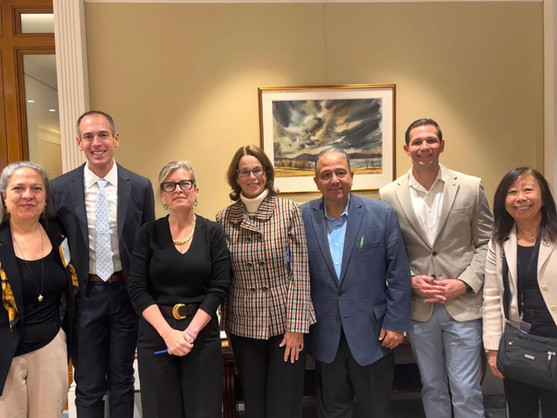
I was honored to speak at the Massachusetts Public Health Alliance's (MPHA) Public Health Excellence Day at the State House, celebrating 5 years of the public health excellence program and last year's passage of the Statewide Accelerated Public Health for Every Community (SAPHE) 2.0 Act. I am very grateful for the work that MPHA is doing to build stronger, healthier communities and reduce disparities in healthcare access and quality across Massachusetts.
Municipal public health workers play a crucial role in promoting healthy communities as they serve as the front lines of public health. Their work includes mitigating substance use, preparing for emergencies and natural disasters, and implementing health promotion programs to educate communities and prevent the spread of misinformation. Ultimately, they help pave the way for transformative health outcomes for every member of the community, fostering a healthier, more resilient society for all. It has been an increasingly stressful environment, exacerbated by significant cuts to federal funding and the deliberate dismantling of crucial public health infrastructure at the federal level.
I am so proud of the Legislature's work last session in getting SAPHE 2.0 across the finish line to ensure strong public health protections for all residents, regardless of race, income, or zip code, and of the efforts Massachusetts continues to lead on in safeguarding public health.
Public Health Updates
New HPC Report Found that 580,000 Residents in MA Live in Pharmacy Deserts
Yesterday, the Health Policy Commission (HPC) released a report finding that over half a million people in Massachusetts (8.3% of the population) live without easy access to pharmacies. Communities with limited access to pharmacies, known as pharmacy deserts, face challenges in obtaining medications and health services, where residents must travel long distances to reach the nearest pharmacy. Pharmacy closures and deserts can exacerbate existing health disparities and make it difficult to access vaccinations, medications, and other health care services. About 580,000 residents in Massachusetts live in pharmacy deserts, while an additional 525,000 (7.5% of the population) reside in “near deserts,” areas at risk of becoming pharmacy deserts. Since 2018, nearly 370 pharmacies have closed in the state, with grocery-based pharmacies, small chains, and independent pharmacies experiencing the largest relative decreases. The highest concentration of pharmacy deserts is found in urban areas and neighborhoods with lower population densities and a higher proportion of residents aged 65 and older. This poses significant risks for both patients and healthcare systems. Pharmacy deserts have been associated with negative effects, including older adults skipping their cardiovascular medications and increased use of hospital and emergency department services. This trend places additional stress on the healthcare workforce, raises costs, and leads to worse overall health outcomes.
Over 150 Schoolchildren Quarantined Due to Measles Exposure as Outbreak in Arizona and Utah Continues
Last week, South Carolina officials reported that more than 150 unvaccinated schoolchildren are undergoing a 21-day quarantine after exposure to measles. According to the South Carolina Department of Public Health, the quarantined children come from two schools in Spartanburg County - Global Academy of South Carolina and Fairforest Elementary. South Carolina is the latest state to experience a measles surge this year; outbreaks in New Mexico and Texas earlier this year resulted in hundreds of measles infections and the deaths of three people. It is unclear whether the South Carolina outbreak is related to a new outbreak of measles, which began in August and has sickened more than 100 people along the border of Utah and Arizona – the second largest cluster of cases in the U.S. this year. However, both outbreaks have primarily occurred in unvaccinated individuals. According to the CDC, the United States has confirmed 1,596 cases of measles this year, representing the highest annual number of cases in over three decades. Measles, also known as rubeola, is a very contagious viral illness that causes a rash, fever, and cough. The illness is so contagious that about 90% of people exposed to measles who are not immune to the virus will develop a measles infection. Because measles is highly contagious, at least 95% of the population needs to be vaccinated against the illness to achieve herd immunity. Reaching herd immunity through high vaccination levels ensures that measles and other contagious illnesses are not spread from person to person throughout a community, thereby protecting individuals who may be immunocompromised or unable to be vaccinated due to legitimate adverse reactions diagnosed by a medical professional. Both the CDC and the Massachusetts Department of Public Health recommend that everyone receive two doses of the Measles, Mumps, and Rubella (MMR) vaccine. Those who complete the full MMR vaccine course are typically considered to be protected against measles and rubella for life, while immunity to mumps may wane over time. For more information about measles and the MMR vaccine, visit https://www.mass.gov/info-details/measles.
Popcorn Distributed in Massachusetts Recalled for Undeclared Peanut Allergy
This week, bags of Cabot Creamery Sea Salt Caramel Cheddar Popcorn sold in 6oz bags are being recalled for an undeclared peanut allergy after multiple consumers reported finding peanuts in the product. Jody’s Inc., the popcorn manufacturing company, announced the recall through the U.S. Food and Drug Administration’s website last Friday, warning that people with an allergy or severe sensitivity to peanuts risk serious or life-threatening allergic reactions if they consume the affected popcorn. The recalled popcorn was distributed by Jody’s Inc. on July 23, 2025, to distribution centers in California, Florida, Georgia, Illinois, Massachusetts, Maryland, North Carolina, Oregon, and Texas. According to the FDA, peanuts are one of the nine major food allergens, including milk, eggs, fish, crustacean shellfish, tree nuts, wheat, soybeans, and sesame. About 33 million people in the U.S. have at least one food allergy, and the nine major allergens account for 90 percent of all food allergy reactions. For this reason, the Food Allergen Labeling and Consumer Protect Act (FALCPA) of 2004 and the Food Allergy Safety, Treatment, Education, and Research (FASTER) Act of 2022 require that the nine major food allergens be declared on pre-packaged foods in simple terms, either in the ingredient list or in a separate allergen statement. Consumers in Massachusetts are encouraged to check their Cabot Creamery Sea Salt Caramel Cheddar Popcorn for the following information:
“Best If Enjoyed By” date of July 15, 2026
Lot number 2519907B1
UPC 8 50016 95530 6
Bird Flu Continues to Affect America’s Farmed Birds and Dairy Cow Populations this Fall
Since the beginning of September, highly pathogenic avian influenza (HPAI), often referred to as bird flu, has affected dozens of poultry flocks, resulting in the deaths of almost seven million farmed birds in the U.S. This includes approximately 1.3 million turkeys; according to the American Farm Bureau Federation, the U.S. turkey flock has decreased to its smallest size in 40 years, notably just ahead of the Thanksgiving holiday. According to the U.S. Department of Agriculture (USDA) Animal and Plant Health Inspection Service, reports of infected wild birds have also increased this fall, while Idaho, Nebraska and Texas have identified bird flu outbreaks in dairy cows within the last 30 days. Bird flu is a disease caused by avian influenza A viruses that typically spread between birds, not people. One subtype of bird flu, H5 virus, is spreading worldwide in wild birds and causing intermittent outbreaks in U.S. poultry and dairy cows. Additionally, H5 bird flu has caused some rare human infections. Humans who have certain types of exposure to infected birds or other animals can sometimes become infected with avian influenza A viruses. Human infections can occur when enough virus gets into a person’s eyes, nose, or mouth or is inhaled. Therefore, people with work or recreational exposures to H5N1 virus-infected animals (such as sick/dead poultry or dairy cows) are at increased risk of infection and should take recommended precautions. An infected person may become very ill, but the disease does not typically spread to other people. There have been 70 confirmed total reported human cases and 1 death associated with H5N1 bird flu infection in the United States. While the current public health risk is low, the CDC is continuing to carefully monitor the situation as it develops and is working with states to monitor people with animal exposures.
New Study Finds Peanut Allergies Have Plummeted in Children
A new study published in the journal Pediatrics on Monday found that food allergy rates in children under the age of 3 decreased after the National Institute of Allergy and Infectious Diseases formally recommended early introduction of peanut products to infants to reduce the risk of developing a peanut-related allergy in 2017. The study noted that between 2015 and 2020, there was a 36 percent reduction in all food allergies, driven predominantly by a 43 percent decrease in peanut allergies. Additionally, researchers found that peanut allergies in children between the ages of 0 and 3 decreased by approximately 27 percent after a 2015 landmark study first found that exposure to peanuts reduced peanut allergies in babies by 80 percent. For decades, doctors had recommended delaying feeding children peanuts and other likely allergens before age 3. The 2015 study inspired new guidelines urging early introduction to allergens, and overall, about 60,000 children have avoided developing peanut allergies since the 2015 study. This week’s new study offers promising evidence that early allergen introduction is both being adopted and making a measurable impact.
Cambridge Updates
Government Job Fair on October 29
Cambridge’s Office of Workforce Development is holding a government job fair on Wednesday, October 29, at the Central Square Library from 11:00AM - 1:00PM. This is an opportunity to connect with representatives from state and local government agencies, explore job openings, and expand your network. Featured employers include the City of Cambridge, the City of Somerville, the City of Medford, the Massachusetts Water Resources Authority (MWRA), the Massachusetts Bay Transportation Authority (MBA), and the Massachusetts Department of Developmental Services (DDS). Contact Josh Foley at 617-349-6259 or jfoley@cambridgema.gov with any questions.
Cambridge Public Health Department Vaccine Clinics
The Cambridge Public Health Department (CPHD) is planning its fall vaccine clinics in various community locations this year. CPHD clinics will offer flu and COVID-19 vaccines for adults and children 6 months and older. Registration for clinics is available here.
October 29, 3:30-6:30pm: Reservoir Church, 170 Rindge Ave
October 30, 4-6:30pm: Pisani Center, 131 Washington St
Services and Resources
Reproductive Care, Gender-Affirming Care, and Crisis Resources
These are a few of the resources and help lines available for people seeking reproductive or gender-affirming health care or experiencing a crisis. Help is available, and you are not alone.
LUCE Defense Hotline
If you see or suspect ICE or federal agents are in your neighborhood, contact the LUCE Immigrant Defense Network’s Hotline, which operates in several languages, at 617-370-5023 from 9am-5pm. A trained operator will ask for details, then dispatch a volunteer to the site, who will attempt to verify the situation and the presence of ICE. You can learn more about LUCE and their upcoming volunteer trainings at lucemass.org.
De Novo Center for Justice and Healing
De Novo is a Cambridge-based nonprofit that provides free civil legal assistance and affordable psychological counseling to people with low incomes. Importantly, De Novo also offers high-quality, free legal assistance to low-income immigrants and asylum seekers who are living in Massachusetts. You can learn more about their immigration related services here, and their general mission and work at denovo.org.
MBTA Income-Eligible Reduced Fare Program
The MBTA’s income-eligible reduced fare program offers reduced fares to riders between the ages of 18 and 64 enrolled in an approved state assistance program, including:
Emergency Aid to the Elderly, Disabled & Children (EAEDC)
Transitional Aid to Families with Dependent Children (TAFDC)
MASSGrant
MassHealth
Supplemental Nutrition Assistance Program (SNAP)
You can learn more about the program and how to apply at mbta.com/fares/reduced/income-eligible.
Intimate Partner Abuse Prevention Helpline
This initiative is designed to prevent intimate partner violence by fostering accountability and change in people who harm or may harm their partner. You can find more information at 10to10helpline.org or by calling 877-898-3411.
SafeSpot Overdose Prevention Helpline
SafeSpot is a virtual spotting/overdose detection service for people who use drugs. Learn more at safe-spot.me or access it by calling 800-972-0590.
Alzheimer's Association Helpline
The Alzheimer’s Association is a nonprofit that provides support, research, and care for Alzheimer’s and dementia. It is available 24/7 for caregivers and patients. More information is available at alz.org, or by calling 800-272-3900.
MassLegalHelp.org is a resource to help Massachusetts residents learn about their legal rights. The website does not offer legal advice or answer individual questions, but has a page about options for finding a lawyer. It does provide resources for those facing legal issues, such as a landlord refusing to make repairs, appealing the denial of SNAP benefits, and questions about getting a CORI sealed.
As always, please contact me with questions or concerns at Marjorie.Decker@mahouse.gov.
Sincerely,
Marjorie

